Feeling Time and Vibrations, Fabio Pariante interviews Bianco-Valente, 2021
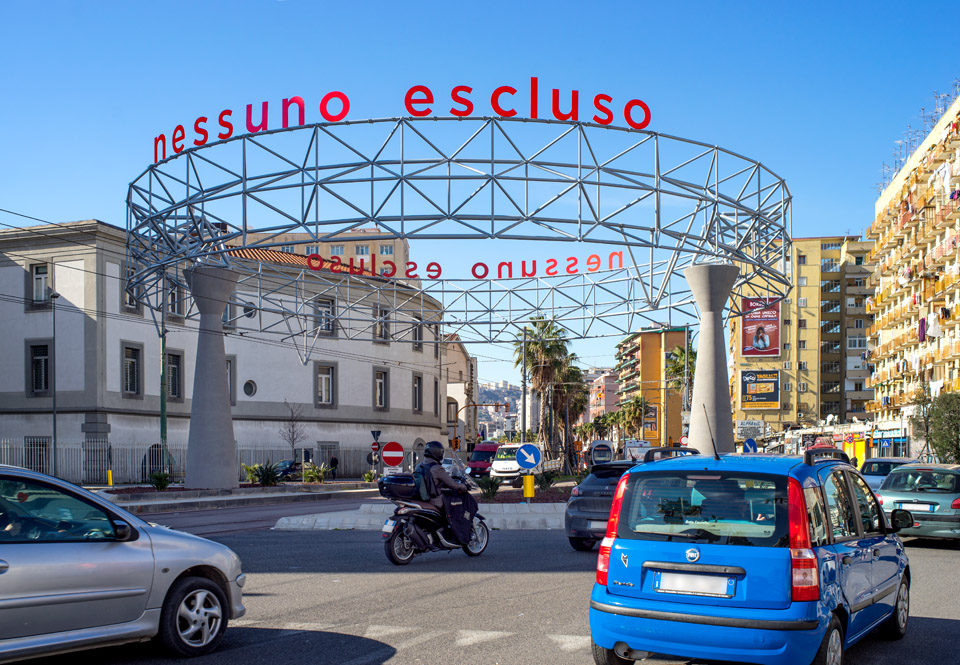
In a period when our lives are suspended because of the pandemic, we should ask ourselves questions that help us appreciate the meaning of life, improving our way of living. Appreciating more the simple things that surround us every day, which we might take for granted. Weighing time, space, perception, our relationships with the environment and our bond with nature: these are connections that should help us better define our priorities and grasp the weight of what matters most. Like a distracted glance at a stranger, and perceiving their vibrations. A feeling for feeling the other: empathy. The Italian duo Giovanna Bianco (Latronico, 1962) and Pino Valente (Naples, 1967), better known as Bianco-Valente, have documented anthropological aspects through the relationship between body and mind since 1994, working across a range of media — from photography to video, through installation and performance. Their projects tell stories worth reflecting on: an emotion, an event, a trace in time where words become an essential expressive means for releasing information about the territory to the viewer. Il mare non bagna Napoli and Relational, created for the MADRE Museum (Naples), Come il vento in Lebanon, or Tu sei qui at Palazzo Strozzi in Florence are among their most recent projects. Nessuno escluso was created in Naples, the city where Bianco-Valente live and from which they can reflect on their next journey, their next story. For FRONTRUNNER, the two artists share their emotions, step by step.
Fabio Pariante Bianco-Valente, how did your artistic partnership come about?
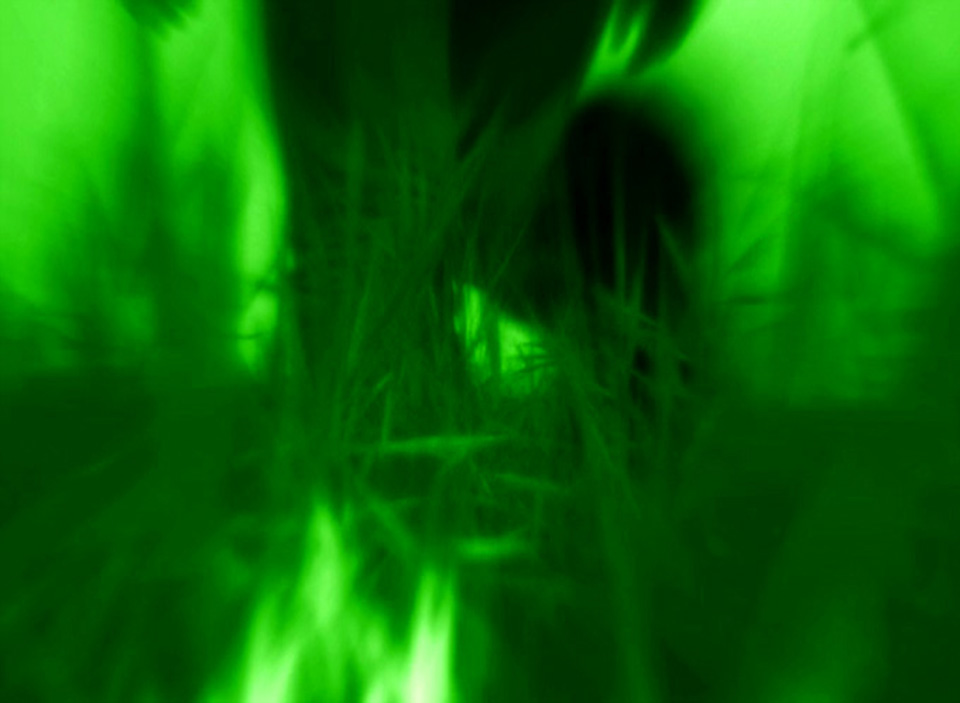
Bianco-Valente We met in 1994. We were university students, and although we were already frequenting galleries and some artists, art wasn't part of our idea of the future. Giovanna had bought a video camera to make her thesis film in Film History, and quite naturally we started using it, experimenting with chromatic distortions and perspective alterations. We shot scenes using very little light, obtaining images that were barely visible within the background noise. We were fascinated by mental images and wanted to recreate them in electronic form. After a couple of years we had already begun exhibiting videos and video installations in Italy and collaborating with important galleries. The works were based on technology, but in reality we were questioning ourselves about philosophical concepts — we studied the body-mind duality and the way different life forms have evolved the ability to perceive external reality and interact with it. In the early 2000s we worked a great deal on the concept of artificial intelligence, creating a series of installations based on personal computers programmed to carry out emblematic tasks, such as reading poems live, or immersing themselves in an infinite calculation from which partial data was extracted and, translated into sound frequencies, generated a sound resembling waves breaking on a beach. These works, too, were based on technology, but what interested us was prompting existential reflection.
F.P. You often work abroad as well — why did you choose to live in Italy, and how decisive is living in Naples for your artistic production?
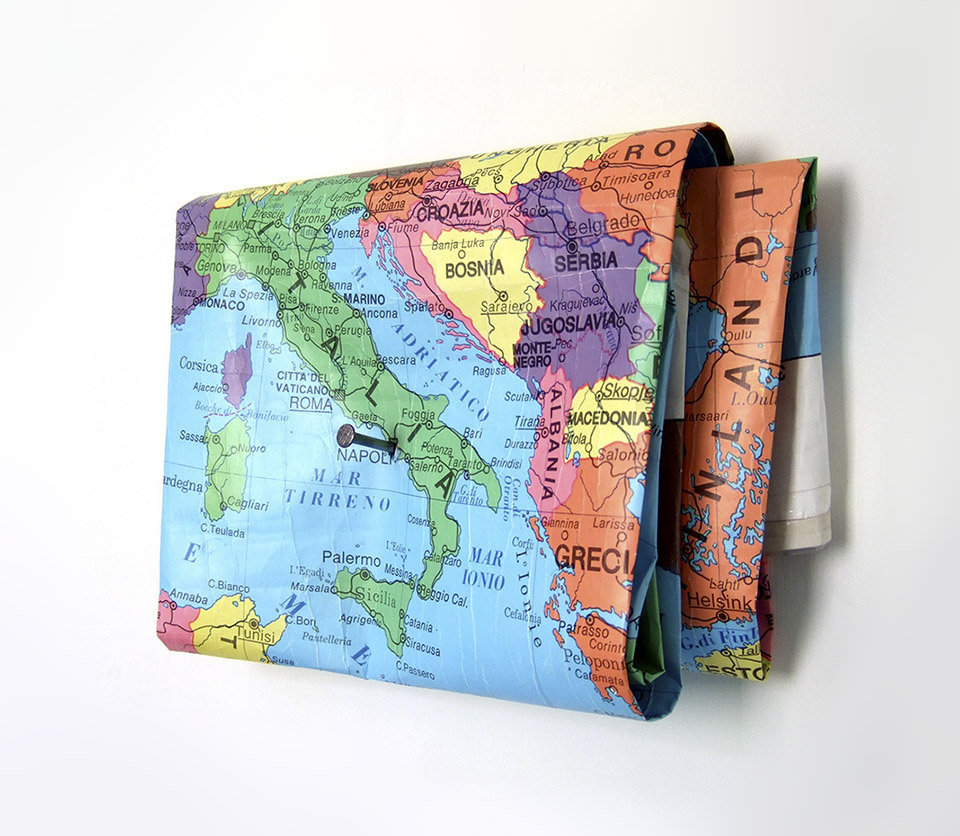
B-V We consider it a privilege to be able to live in the center of this city, which has existed for 2,500 years and which, throughout all that time, seems to have devoted itself solely to accumulating wonder and horror. Everything it has to offer you. Whatever is staged in any theater anywhere in the world has already happened in Naples — those lines we've already heard, in the street, spoken by ordinary people. What in other places is considered the future has already happened here, we've already lived it. Paraphrasing Umberto Eco, we could say that Naples, without the rest of the world, would continue to exist, practically unchanged, while the world, without a city like Naples and all the imagery that radiates from it, could certainly not be the same.
F.P. How does a Bianco-Valente project come about, and what do you feel when working on one?
B-V Works on a monumental scale, or interaction with a community of people, are complex elements that can't be tested in one's own studio — they can only be imagined, and then, when the moment comes to put the project into practice, one has to be ready to ride the wave of all the unforeseen events and adjustments needed to adapt what one had in mind to reality. That reality is made up of people, places, moments, devices that interact differently and unpredictably each time. Over time we've come to understand that it's precisely these adaptations that make the work fully alive, contemporary, necessary. Among the abilities we've developed most over the years is precisely that of mentally picturing the possible outcomes of a project. During the working phases we become a bit like acrobats trying to keep everything in balance, especially the relationships among the people involved, at least until the opening. It's very exhausting work, but we believe it's the right price to pay if one wants to keep experimenting and innovating through one's work. Then, when the work that for months remained confined to one's own mind materializes in reality, one is overwhelmed by very deep emotions that fully repay all the effort made.

F.P. Relational, Tu sei qui, Misuro il tempo, Ogni dove, Terra di me, Il mare non bagna Napoli, to name a few: each work becomes a voice for its territory of reference. How much does the weight of words matter in your work?
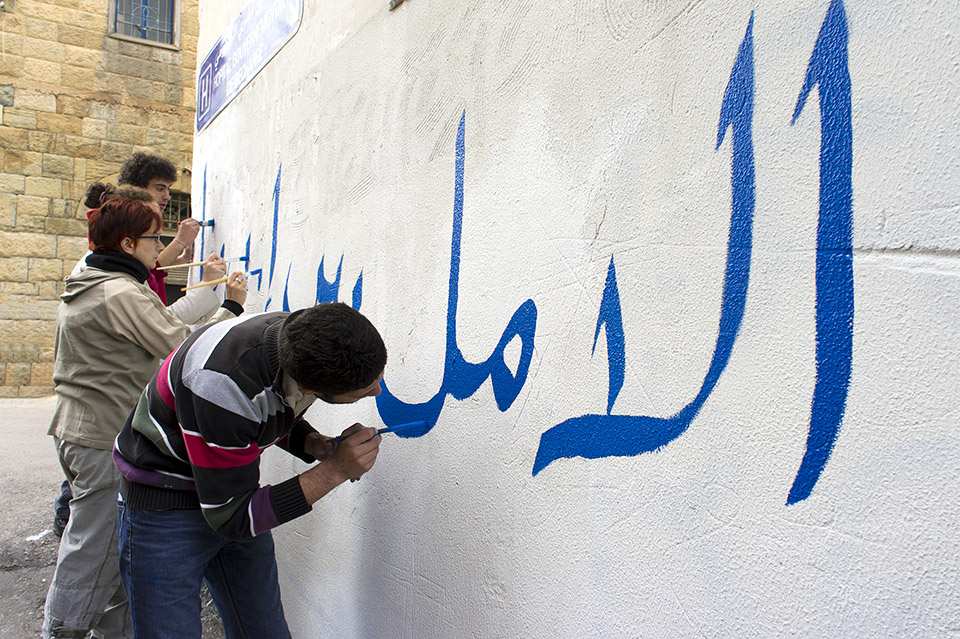
B-V We are the only species that uses such a complex and articulate form of communication. During the phases of evolution that set us apart from other primates, the emergence and development of language meant that our brain specialized in acquiring information about external reality through the retelling of other individuals' experiences. This predisposition has made us ancestrally dependent on stories: fables, mythological tales, novels, films, comics, plays, social media, and so on. When we read a text or listen to a story, a repertoire of images spontaneously takes shape in the brain, evoked by those words. This "induced" imagery enriches our experiential baggage, blending almost indistinguishably with memories tied to our "real" experiences. As visual artists we're very interested in this interdependence between word and image, and in various interventions in public space we work to alter the perception one has of a given place, interposing an emblematic phrase between the observer and the surrounding scenery.
F.P. Connection, time and perception have always been central themes in your artistic research: what do they represent for you, and how do you interpret them today, in a time of pandemic?
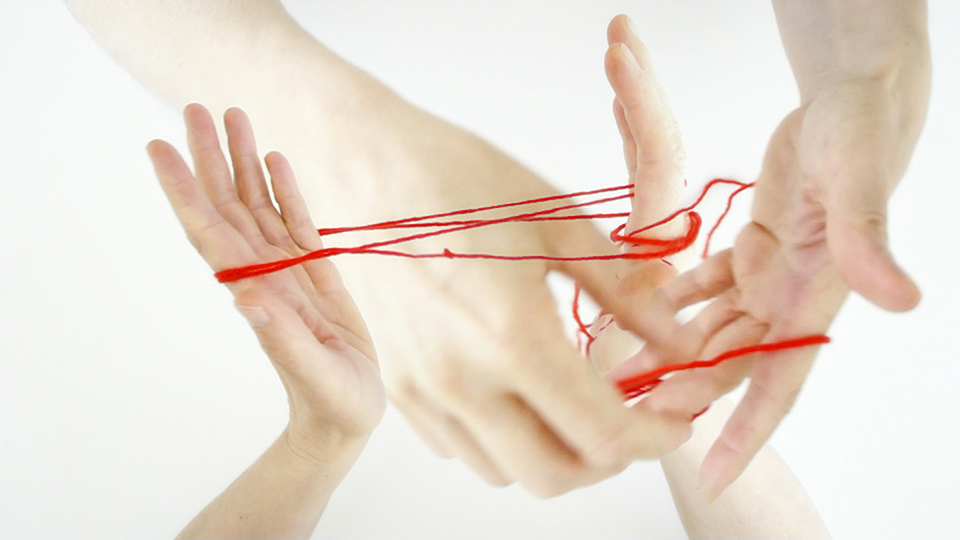
B-V We are made of time, at least as much as we are made of flesh, bone and desire.
F.P. For an artist, what is the right compromise between oneself and the work at hand?
B-V We believe that works are not the most important aspect of an artist's life, and probably not even what will remain as the most significant trace of their path. It's much more important to build connections with other personalities and other disciplines, to keep spaces for dialogue active, to design interventions for public space, continuing to prompt reflection even among those who would never set foot in a museum or a gallery. What remains, in the end, of a body of work is the influence that one's example has had on new generations — or rather, the opportunities one has been able to create for new generations of artists.
F.P. With Nessuno escluso, the concept of "inclusion" is an invitation toward new places, encounters between cultures, integration, coexistence. Two words that in some way reassure, and therefore dispel the solitude of the individual, especially today. How and when was this project born in Naples?
B-V Conformity has never brought anything good. To progress, we need dialogue with people carrying a history different from our own, capable of showing us what exists from a different perspective. The center of Naples is among the most densely populated areas in Italy, and for centuries its streets, its every building, have housed families from very different social backgrounds. This close confrontation has made the city a powerful generator of stories and imagery, well represented throughout the world, in music, theater, film, literature, art. The commodification of the city for tourism, and the resulting phenomenon of gentrification, are however slowly emptying the city center's neighborhoods of their historic residents — students living away from home, less well-off families — thereby fraying the threads of the intricate social fabric and, looking ahead, inhibiting the capacity to generate non-conformist visions in the arts and culture. Through the work Nessuno escluso, ideally placed at the entrance to the city, we intend to raise this issue, recalling that Naples, with its thousand-year history of welcome, integration, transformation, has always known how to create wealth precisely out of its differences.
F.P. Generally speaking, what do you think is missing in art today? And when does a work of art become universal — speaking to, reaching, everyone — belonging to everyone?
B-V What's missing is courage. Galleries that intend to do real research should take advantage of this period of crisis to give more space to young artists, also involving young critics in curating exhibitions or writing critical texts. Since even showing more established artists sales are scarce anyway, it's worth investing more decisively in research, with an eye to future developments. As for artists, they should free themselves from the obsession with the work-as-fetish, fully embrace their role as political and cultural actors, and operate increasingly outside the studio. If one's nourishment and points of comparison remain entirely confined within the bubble of contemporary art — galleries, fairs, collectors, museums — within a few years one can lose all stimulus, ending up folded in on oneself, wearily repeating the same gestures. One must not be afraid to keep doing research, innovating, building bridges with other fields, perhaps failing, but in order to be reborn each time stronger and more aware than before.
F.P. What are your next projects?
B-V A Cielo Aperto, the public-space art project we've curated since 2008 together with Pasquale Campanella in Latronico, in Basilicata, will this summer be the setting for one of the events of Comunità Resilienti, the Italian Pavilion at the Venice Architecture Biennale. We're preparing a publication and an exhibition event that will involve artists and scholars from various disciplines, whom we'll ask to illustrate their vision of the practices to put into action in inland areas, in order to address this particular moment of crisis. We're also working on installation projects to be realized in Puglia, in Palermo, and in Ottawa, Canada.
_
Published in English in the American magazine Frontrunner, 2021