
Benedetta Carpi De Resmini in dialogue with Bianco-Valente, 2024
Benedetta Carpi De Resmini Before we get into the dimension of the project and reflect on the experience itself, I'd like to open this dialogue with the first idea we shared at the outset: the choice to work on connections. The image that came to my mind immediately was the work La mia generazione (My Generation): an expression of the bond you sensed between people and the territory. Ercolano has deep roots that surface, rather like a rhizome — defined as a perennial stem, prostrate and mostly underground. It looks something like a root, but differs from one in that it is divided into internodes. I'd like to reflect with you on this great metaphor of the rhizome and the root, which has a diffuse, reticular structure rather than an arborescent one. I think it's interesting how, within the variety of experiences, the heterogeneity of the way you develop your works, and the endless ways in which you generate exchanges of words and images, that is precisely where you manage to bring out the point at which difference arises. What led you to turn this connection code (the QR Code) into a metaphor for a network of internodes? What did you imagine at the start, and what did you grasp about the city, ancient and present, once you began to walk through it?
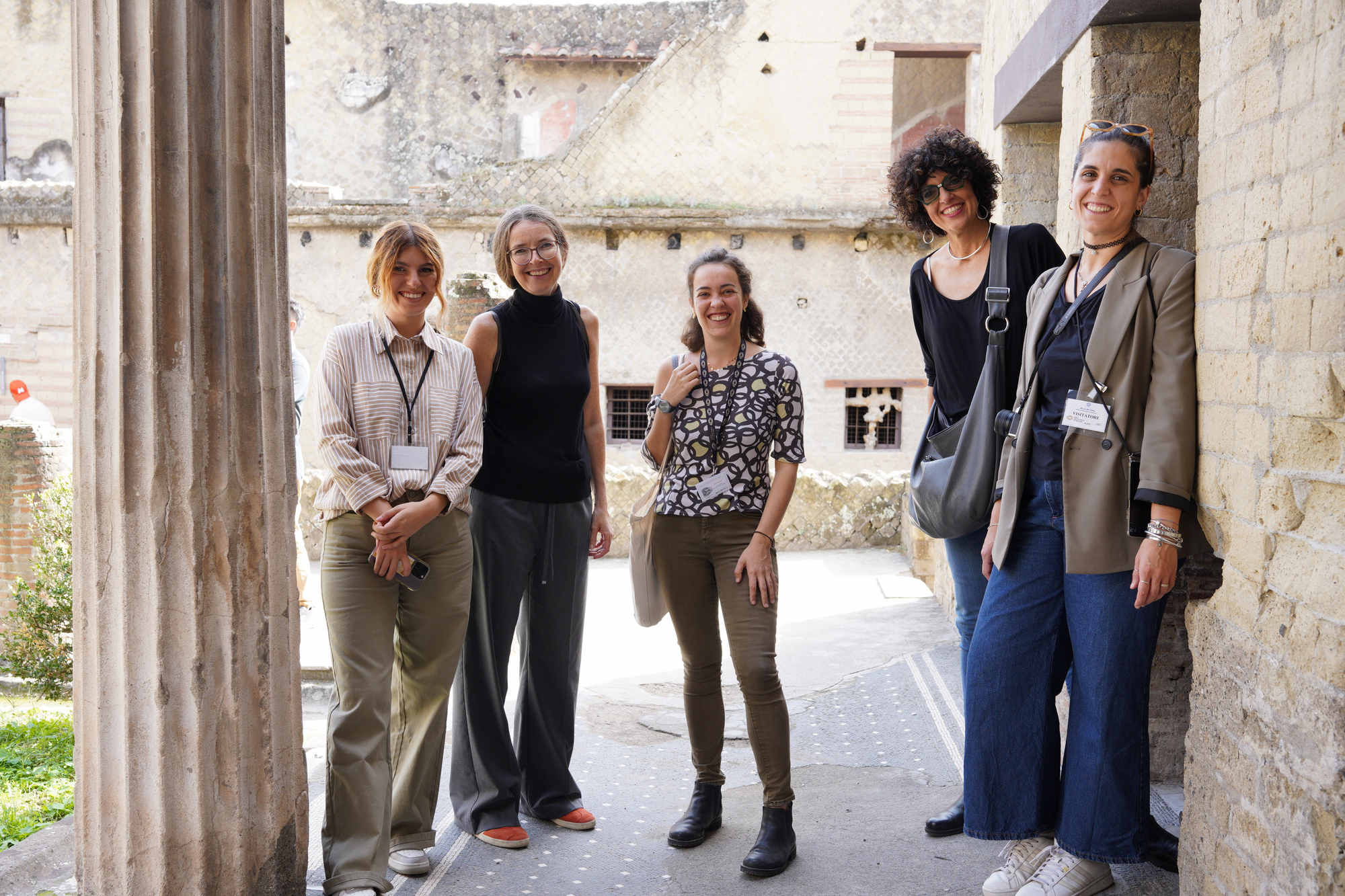
Bianco-Valente In Ercolano we imagined we would have to activate interactions with tougher people, somewhat lost in the tight grip of everyday contingencies; instead we were very surprised to discover a wide margin of gentleness in people, especially — though not exclusively — in the younger generations. We met shopkeepers who are also active as visual artists, young entrepreneurs ready to work as music producers, and craftspeople who smile and have a light in their eyes as they tell you about the mission they've set themselves: bringing beauty into the world. After a few visits to Ercolano, it started to seem as though we were the tough ones — the ones with the short-sighted gaze, chasing after the everyday. So we decided to follow the energetic flows that people give off, to listen to their stories, and to try to read their looks, postures and gestures. We looked at the finger, but also at the Moon.
Benedetta Carpi De Resmini It's interesting to note how everything comes back to the idea of energetic flow, of the transmission of information and energy between people. In many of your works, the dimension of the network emerges, perhaps more metaphorically — a network that synthesizes a concrete or virtual space, drawing in a larger or smaller group of participants: the residents of Ercolano. Here the network becomes a knot, and then a fabric: the key to this work was a votive image of the Madonna dell'Arco, next to which was a series of knots. Can you tell us about the theoretical, visual and human-relational process that led to the creation of the two major installations (Piazza di Via Mare and Seconda Traversa Mercato)?
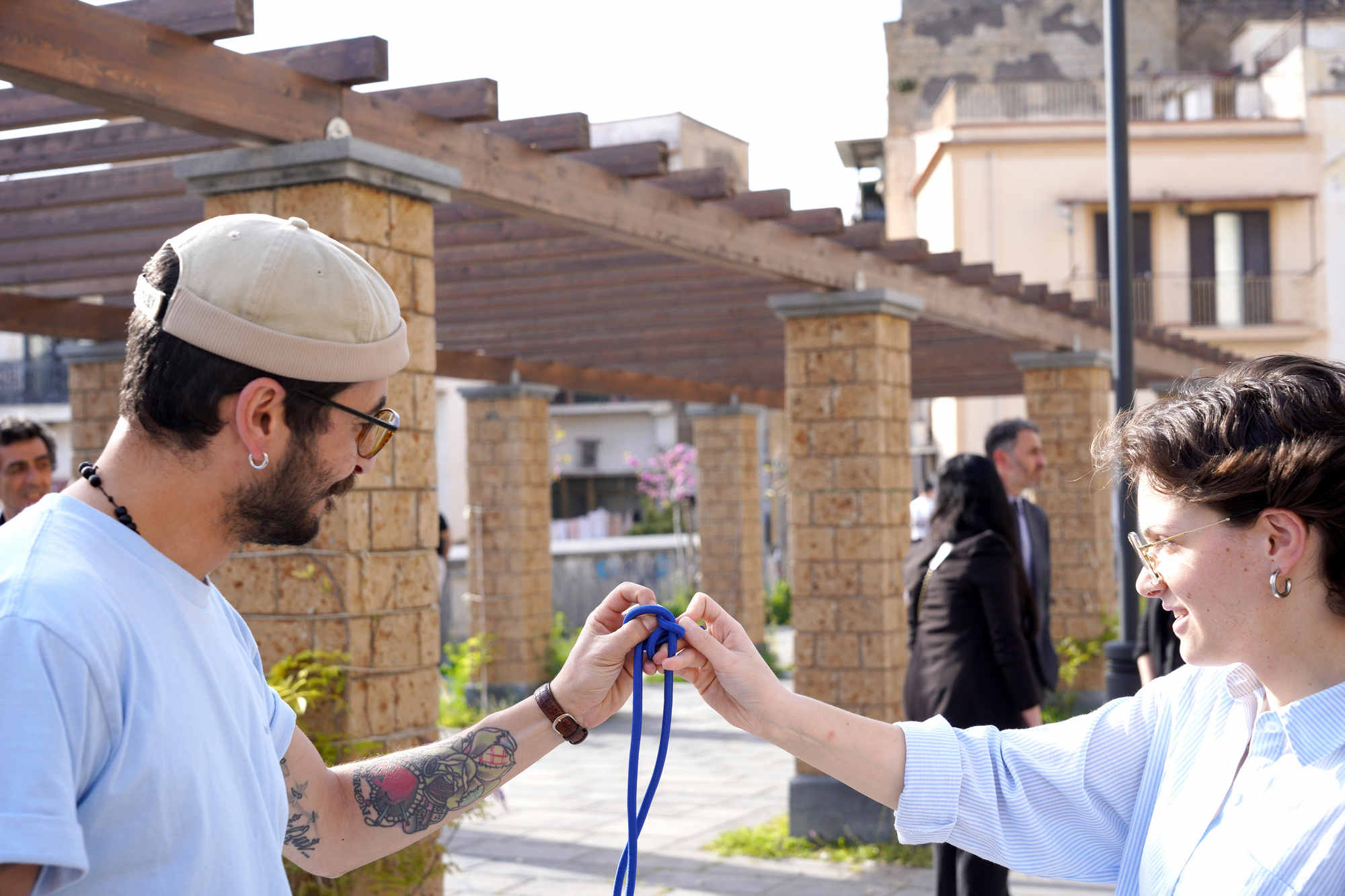
Bianco-Valente Ercolano is a land of returns. Many of the young men and women who left the city to study or find work decide, at a certain point in their lives, to come back. They set things in motion, often together with others, to make their future take root here — as if they felt the need to honor an ancestral promise made to this land. From these reflections, and from the fact that the city has a great seafaring tradition — including people who sign on to work as sailors — the performative act Seconda mano (Second Hand) was born. The workshops and meetings we held in Ercolano gave us the chance to ask two people at a time, of different ages or life stories, to cooperate in tying two ropes together in a knot. Each person could use only one hand, making good coordination of movement and intent necessary to succeed. The knot is a metaphor for the bond people express with their own territory; the "second hand" is not one's own, but that of the other person facing you, with whom you must learn to cooperate in order to reach goals that would be impossible to achieve alone.
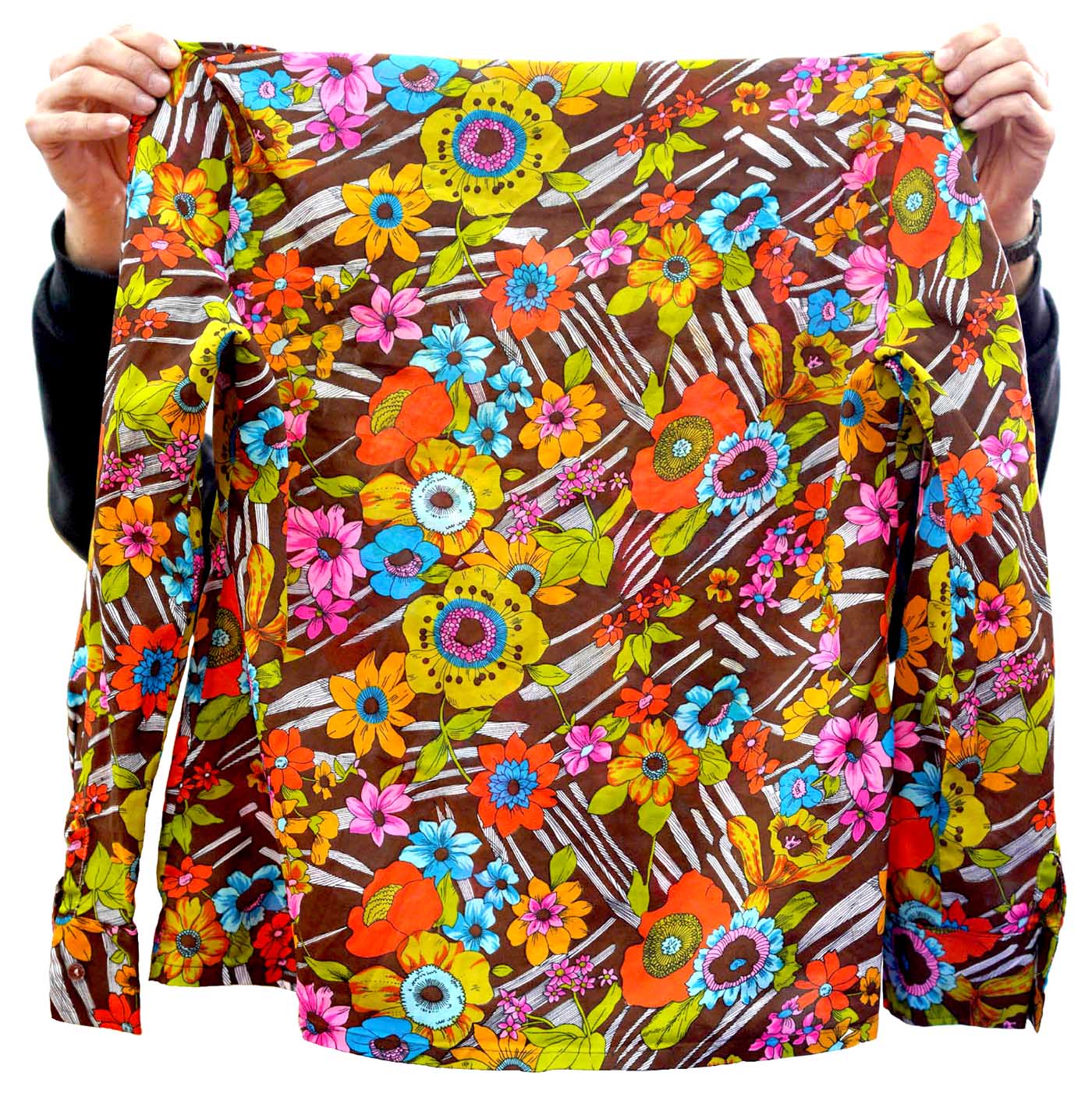
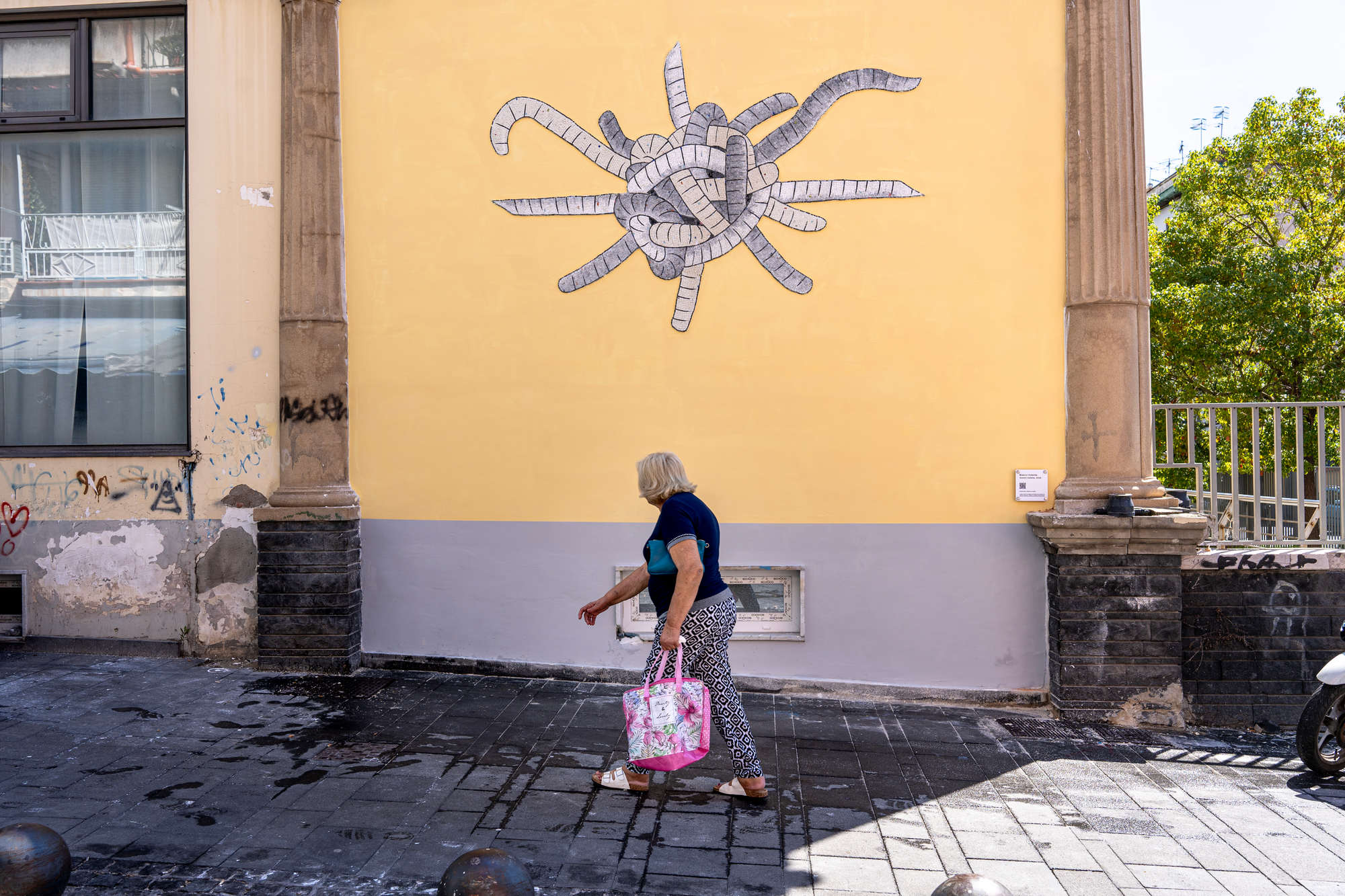
Benedetta Carpi De Resmini Lastly, the installation on Via Panto — a QR Code linking the two works mentioned above — represents the connecting thread that runs beneath the surface. In this case the code, which in a 2015 work was tied to a developmental process, is here symbolically linked to a single iconic photograph taken inside the Warehouse Vintage Store, portraying the movement of sorting and inspecting clothes — a gesture drawing on the local tradition of the clothing trade, handed down now for generations. Once again, in this three-part installation, gesture becomes central: the gesture of the "second" hands, the gesture of inspecting clothes; the physical gesture — the exploration of a real, extended environment — ultimately becomes mental and a matter of memory. It doesn't strike me as incidental that here, contrary to what usually happens, the footage from life is not direct but filtered through a QR Code — as if the code were a diaphragm between inside and outside, as if there were a need to return to a non-place of belonging, from which every other necessary search for connection begins.
Bianco-Valente The gesture of lifting a garment with both hands, to give it a quick visual scan before selecting it, has been one of the most widely practiced rituals in the city since the years right after the Second World War — practiced by those who sort clothes into categories to resell them, but also by the many buyers who still crowd the market on Via Pugliano today. Raised arms holding up a used garment, and all the stories of lived life that this item carries and communicates to us in an instant, became for us an essential scenario for trying to tell the many facets of this territory. We wanted to leave a tangible trace of our experience in Ercolano through works that speak of the bonds between people and the city, but also an immaterial trace, with a QR code installed on Via Panto that allows one to immerse oneself in a kind of diary recounting our journey — a journey made up of many encounters and new connections.
Interview published in Connecting Code Ercolano: A Project by Bianco-Valente, edited by Benedetta Carpi De Resmini, published by Aste & Nodi, 2024, 128 pp. ISBN 9791298533417