
Benedetta Carpi De Resmini, Inter-essere (Inter-being), 2024
The project Connecting Code arose from the desire to support organizations that have worked for years in the territory of Ercolano in taking a further step: opening up the closed space of the ancient city to the city of Ercolano, and vice versa. The intent, then, was to open — both metaphorically and literally — the isolated space of the archaeological site and the neighboring Via Mare district to the surrounding neighborhoods of the historic center and the modern city. The powerful space of the ancient ruins and the recent urban regeneration of the Via Mare district were not, on their own, enough to generate the social and cultural transformations the project aimed for; there was a risk of remaining confined to a two-dimensional perception and experience.
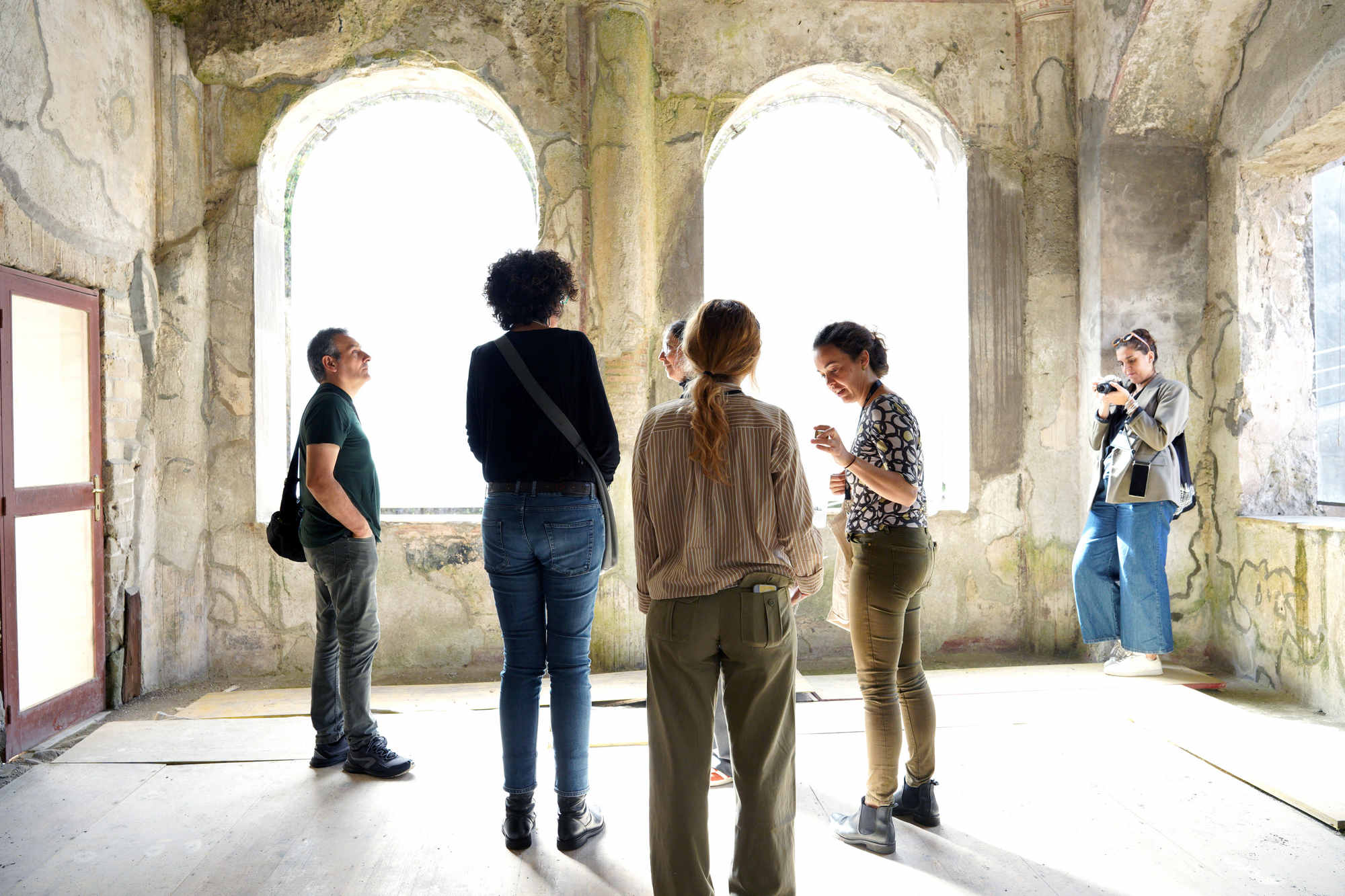
As Deleuze and Guattari put it, the multiple must be made — not by always adding a higher dimension, but on the contrary, as simply as possible, through sheer economy, at the level of the dimensions actually available (A Thousand Plateaus). The insight was to use contemporary art as a tool to give new impetus to the network made up of institutions and third-sector organizations (the Herculaneum Archaeological Park, the Municipality of Ercolano, the Packard Humanities Institute, the Museo Archeologico Virtuale, together with Variabile K, Seme di Pace, and Locanda di Emmaus), and — thanks to the encounter with CAP–Cities Art Projects — to link points that seemed distant and distinct from one another.
As with the French philosophers, for this artistic duo becoming is not about producing; public art is not production — indeed, it is the very opposite: it is alliance. The key to the project lies precisely in that point of connection, that "between," the hyphen in their name — something intrinsic to them and deeply tied to their creative process and methodology. For Bianco-Valente, becoming means placing oneself in a condition of listening, becoming one with the other and with reality.
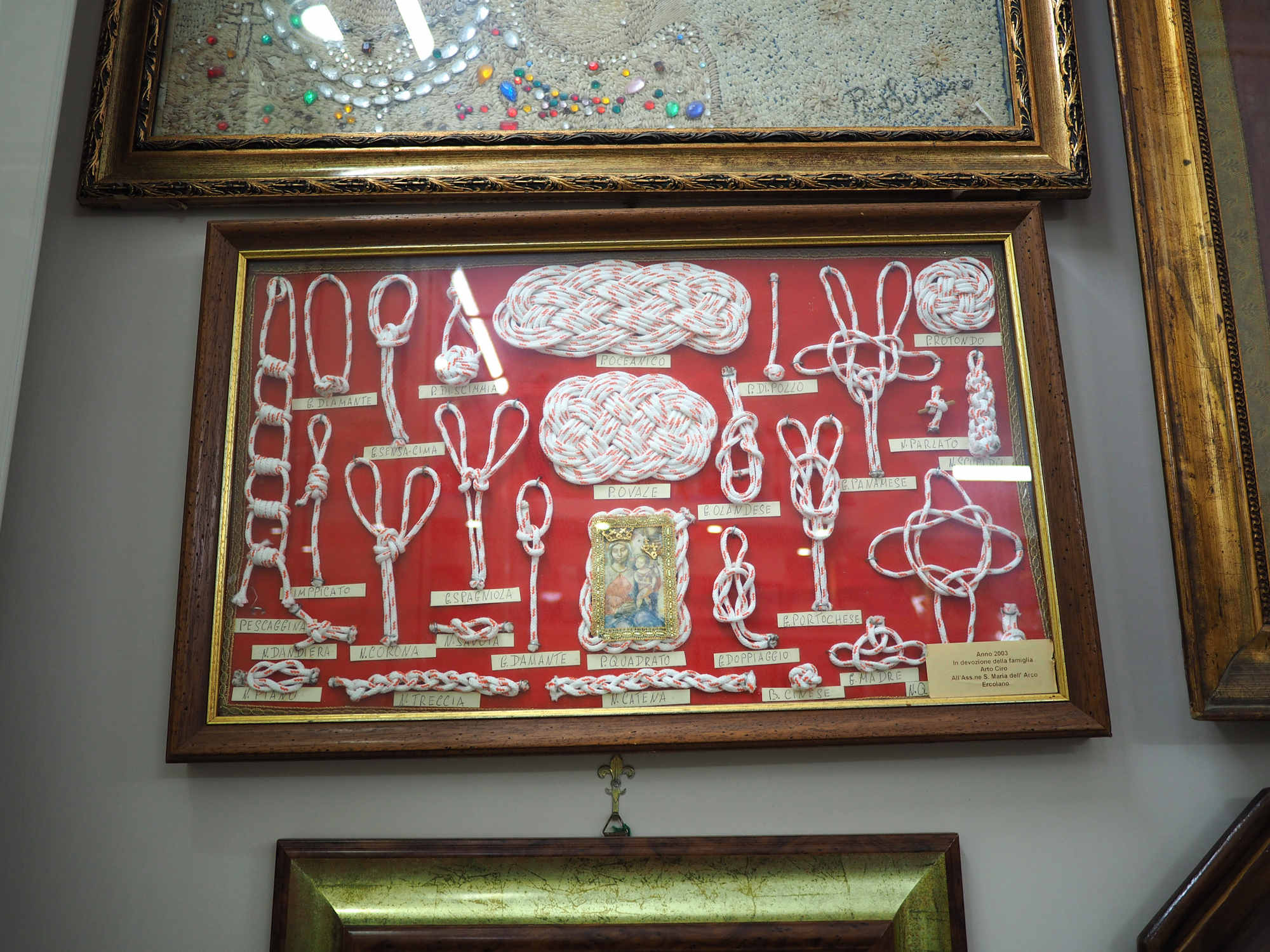
This is how Connecting Code came about. This code of connection guided the project; each encounter arose almost by contagion, out of divergent trajectories that until then had been independent of one another. The map of Ercolano's territory became a rhizome, developing according to a decentralized model with no hierarchy, in which any part can be connected to any other. The encounter with the associations devoted to the venerated Madonna dell'Arco in Pugliano, and above all with a votive iconography linked to the Madonna who unties knots, provided the key that opened up the long trajectories traced during the project.
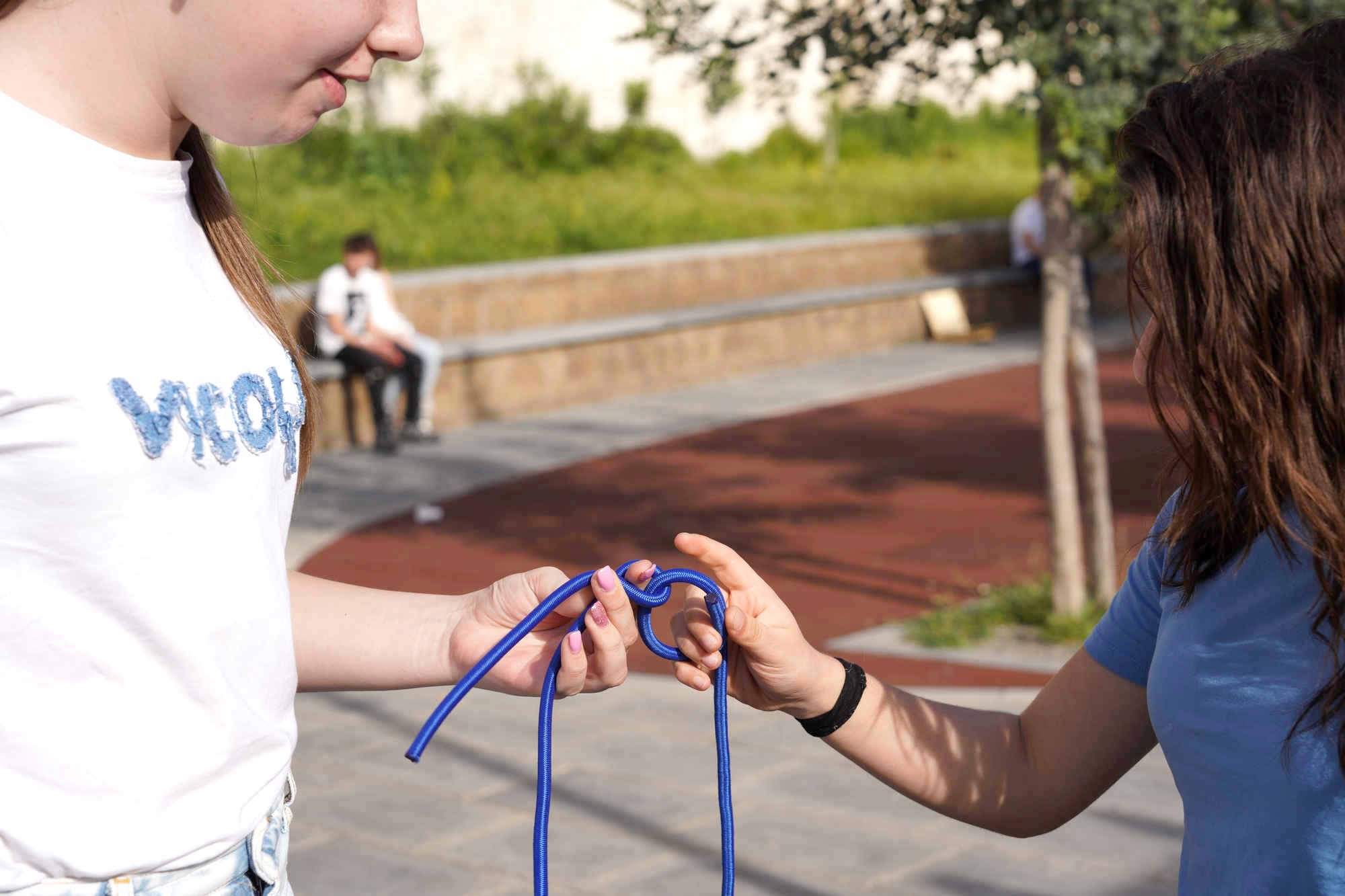
In a rhizomatic view, the point where the Archaeological Park and the city of Ercolano converge turned out to lie precisely between the cult of the Madonna dell'Arco and the activities tied to the vintage market. The line of connection was to work in the "between," in the middle, within the fractures. If knots metaphorically represent bonds — relationships that come undone, that grow stronger, or the difficulties of encounter — in this project the knots represented the connecting thread running through a vast web of more or less complex relationships. Managing to tie a knot with one's "second hand" was the challenge the artists set at every workshop. Encountering the other through one's own second hand is the heart of this diffuse work, because it is in discomfort, in difficulty, that one is placed within the dimension of the "in-between." Seconda mano is also another node in the project's diffuse, reticular network: the vintage market of Pugliano, also known as the "Resina Market" (from the city's old name) — the most famous used-clothing market in all of southern Italy.
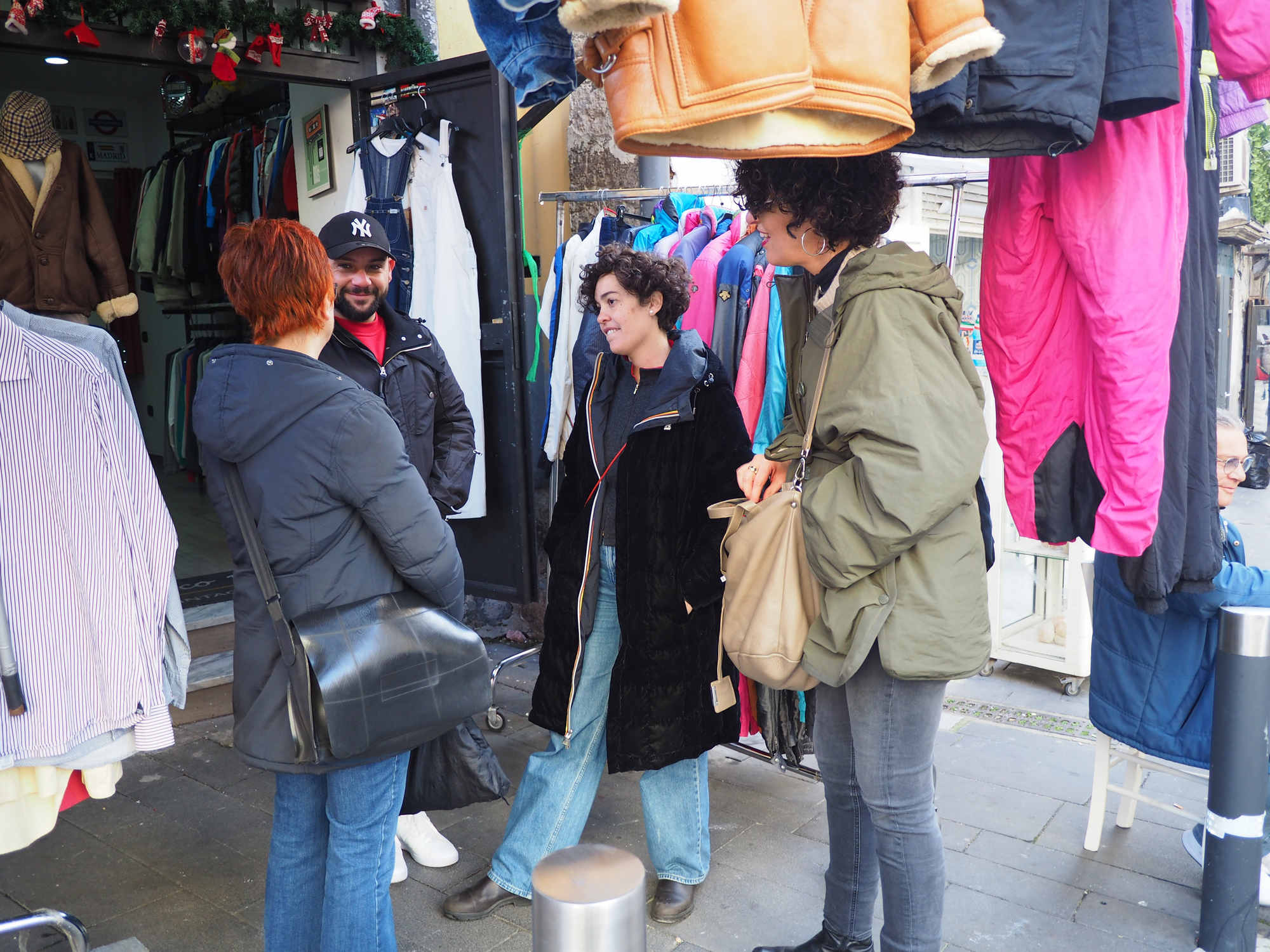
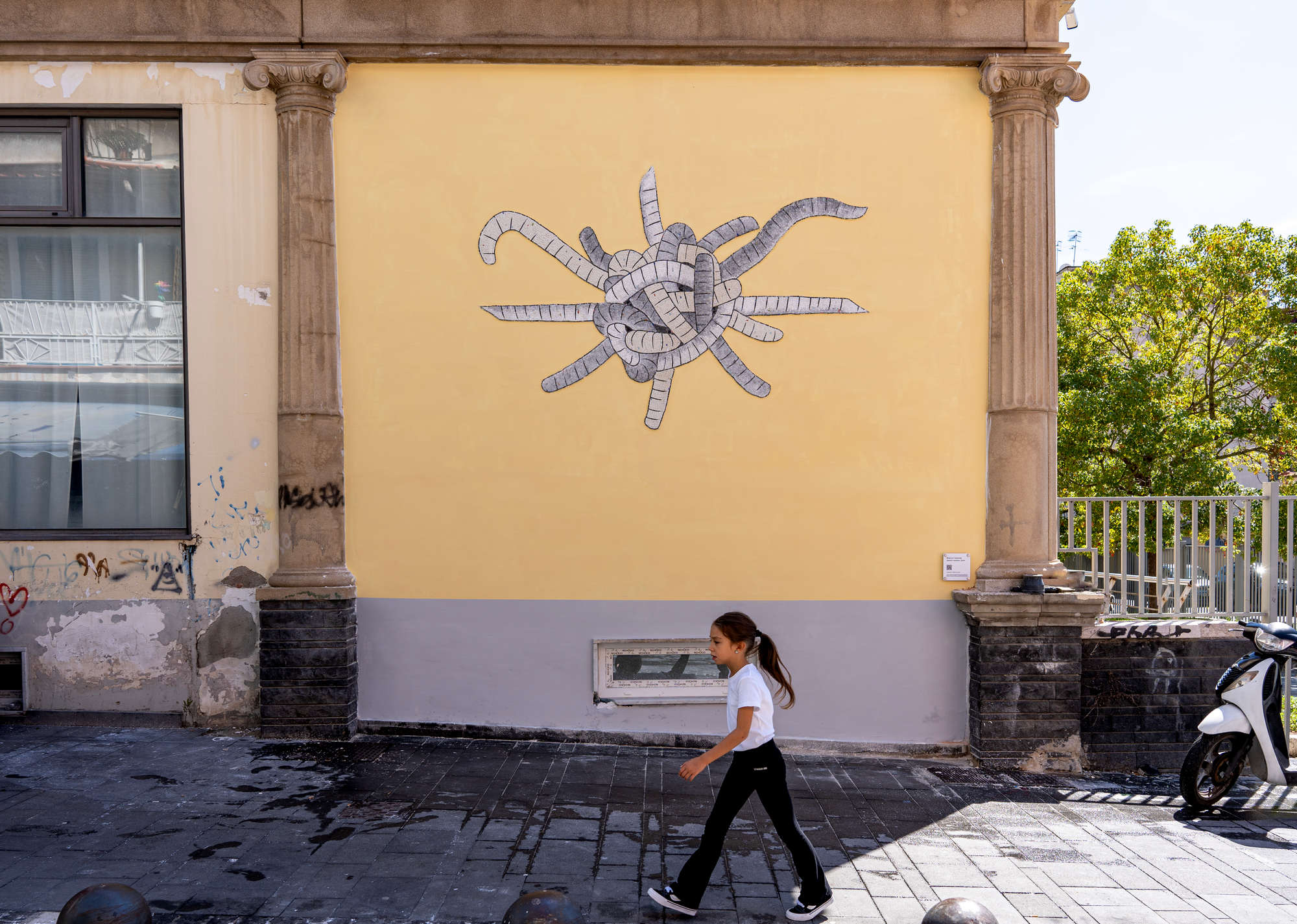
Still very active today, the market dates back to the mid-1940s, right after the Allied landings in Italy, when it dealt mainly in the resale of military uniforms left behind by the Americans themselves. Bianco-Valente brought together Ercolano's artisanal spirit with the classical, historical spirit of the Archaeological Park's mosaics. The "second hands" — and thus the used-clothing trade — appear in the panels of the square facing the Archaeological Park, just as the ancient mosaics reappear beside the Museo Archeologico Virtuale (on Seconda Traversa Mercato), the heart of the city. This is a large mosaic made using the ancient techniques found at the Ercolano excavations, located on Seconda Traversa Mercato.
What makes this work unique is not only its material — everyday ceramics donated by the residents of Ercolano — but the fact that it manages to look at things from different points of view, superimposing seemingly distant planes into a single whole that draws no distinction between "us" (the community) and the "rest" (archaeology).
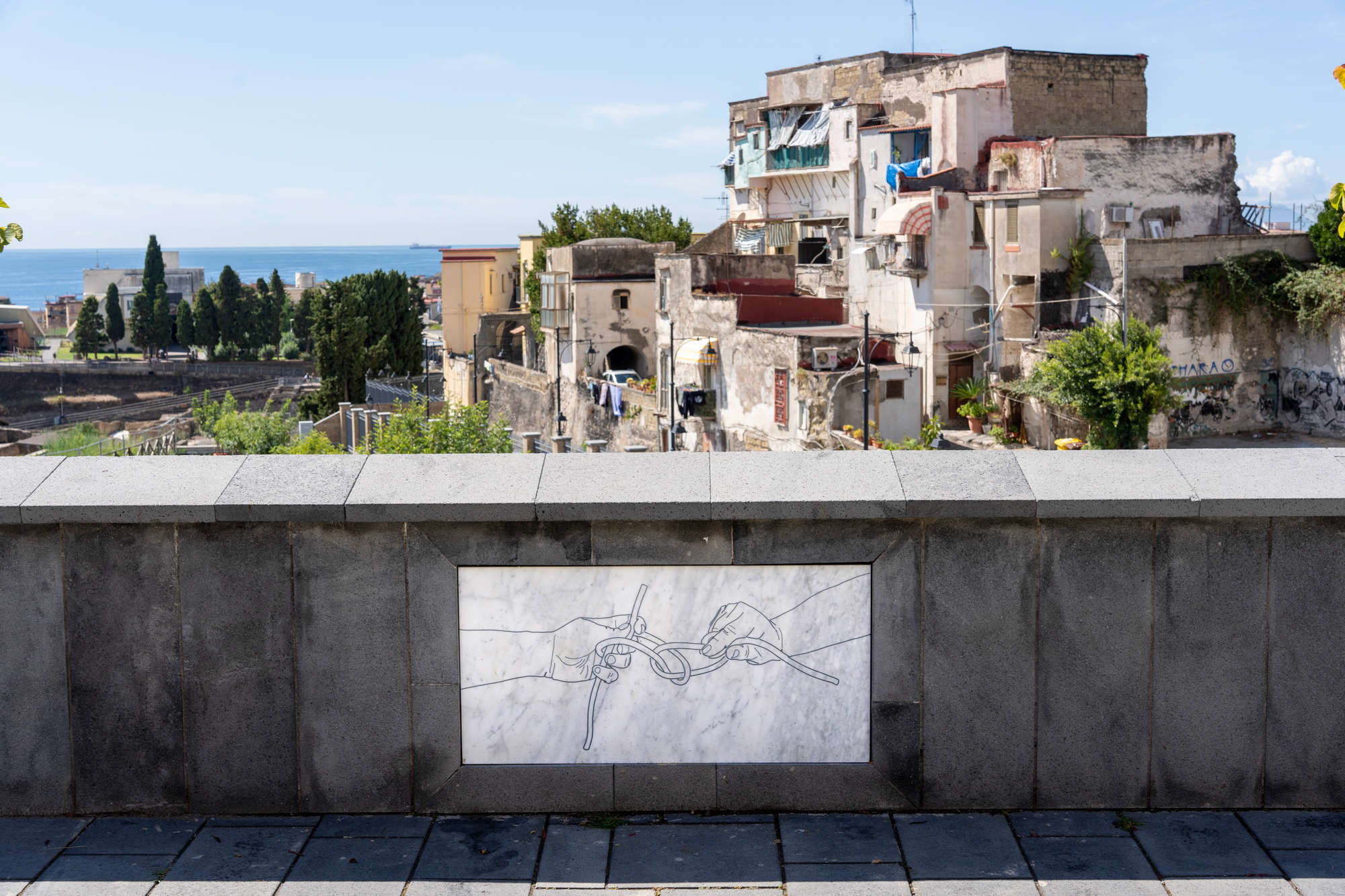
Here too, the knot appears at the center of a mosaic that is metaphorically created by the very human fabric that inspired it. It is that deterritorialized point of junction; it is inter-weaving and inter-being; it is the in-between connecting the heart of the city of Ercolano and that of the Ercolano excavations.
It's worth understanding that this diffuse work cannot be seen as the outcome of a defined system of actions on the territory, nor as a creation whose objective was already known from the outset: the project embodies precisely that dimension of the "in-between." Even though the artists were well aware of moving within a specific context and community, they arrived at an outcome that was unforeseen and, in part, surprising relative to the information they started out with. The connection code — the QR Code that gave the project its name, to which everything is tied, and which symbolizes that "between" of the real world and the multimedia world — is the becoming I spoke of at the outset. What follows is that place in the multiverse where connections are formed: a real and abstract machine, both individual and universal, that gathers an infinity of particles under an infinity of relations — the highest point of contact between different eras and worlds.
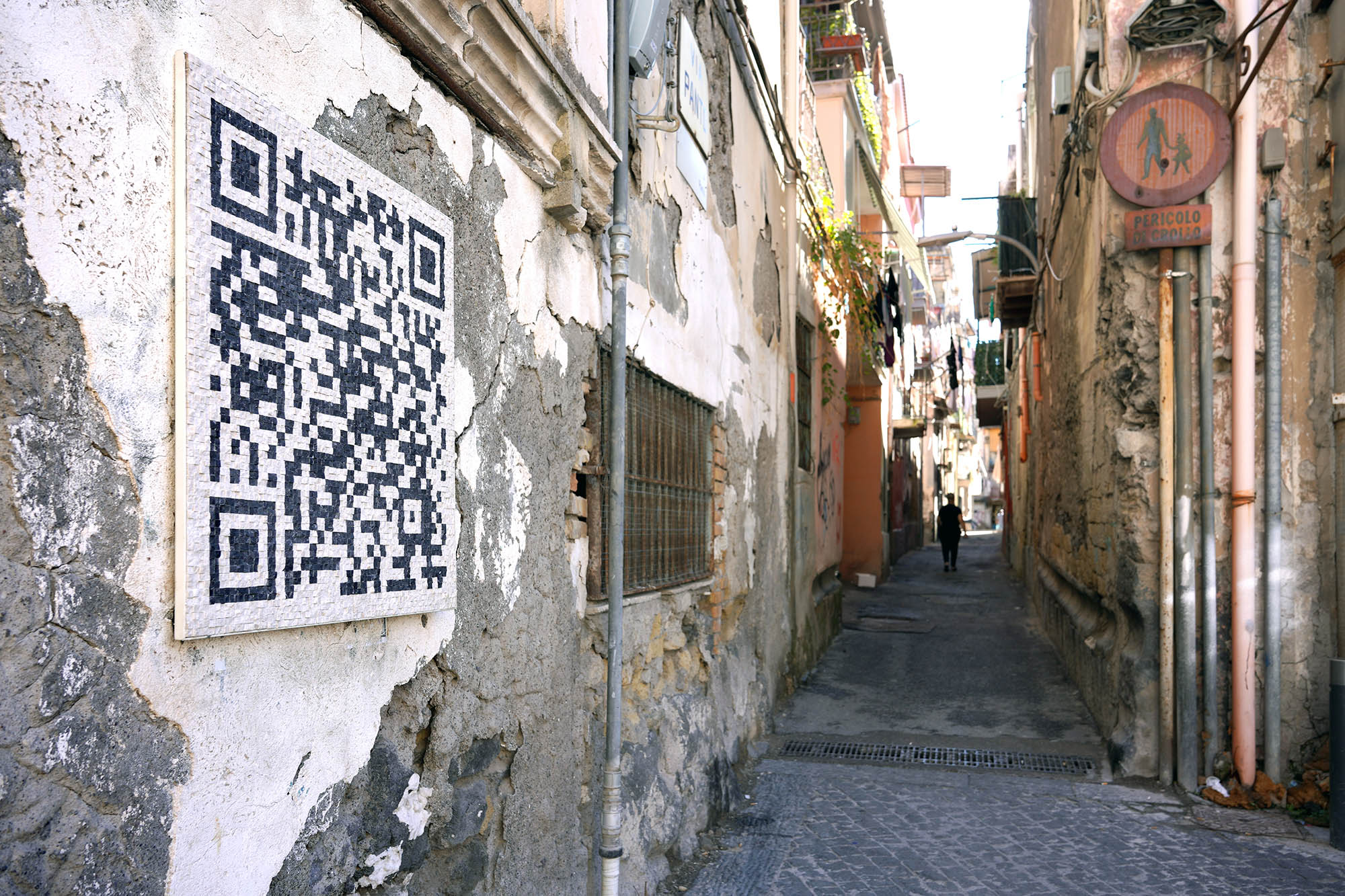
The QR Code is part of the diffuse work: placed at the heart of the Resina vintage market on Via Panto, as a mosaic of black-and-white tiles, it is also linked to each of the other two installations. This code leads to an iconic photograph taken inside the Warehouse Vintage Store, portraying the movement of sorting and inspecting clothes — a gesture drawing on the local tradition of the clothing trade, handed down now for generations. Here, as often happens in their work, the footage from life is stripped of its standard features, placed too in that in-between land which no longer belongs to the "I" but to the "we." That "we" is also represented by the profusion of words tied to the same code (the fruit of the many voices recorded during the project). This stream of words reminds us that in the rhizome there are no fixed points or positions, only flows of union. So while, in technical terms, the works are said to be permanent installations, in reality they are immanent: they belong to the place, are intrinsic to it, and are therefore in continuous becoming. The movement moves beyond the subject and opens it up to relation, to contamination, to "multiplicity."
Essay published in Connecting Code Ercolano: A Project by Bianco-Valente, edited by Benedetta Carpi De Resmini, published by Aste & Nodi, 2024, 128 pp. ISBN 9791298533417